Wednesday, June 29, 2011

Funniest players from each MLB team

Came across some great pranks, commercials and videos of some MLB players from the Bleacher Report. The final video is of Brett Myers who pulls off one of the best baseball pranks ever. Enjoy!
-Professor P-Funk

The quintessential American sports story: Hooray for the Underdog!

“There goes my hero, watch him as he goes!”

Among the many nebulous x-factors in the game of basketball there is perhaps no greater x-factor than injuries. Injuries effect so much to even a single game. They can completely dislodge any amount of momentum from a team and turn it around into instant motivation for the opposition. Injuries can have massive psychological effects on a player, shredding their confidence for the rest of the game and, most obvious of all, they take away a player’s physical mobility and ability to play. Injuries excite conversation, creating another plot line to a game or series of their own; “will he be able to play through it?”, “how will this effect his mechanics?,” “with this injury can we now count them out of the series?” While sometimes an injury is our way to rationalize the outcome of a series, other times injuries add to the glory of the player. Let it also be said that the glory of playing through an injury and winning FAR outweighs the glory taken away from a team that defeats an injury ridden team (i.e. the glory due the ‘11 Mavs vs. the tainted glory of the ‘07 Spurs).. Thus, in the wake of this past NBA Finals, the glory due Dirk Nowitzki will (justifiably) far outweigh the glory taken away from the Mavs on account of Wade’s hip injury in game 5. But before getting to game 5, Dirk Nowitzki’s finger injury was the front and center plot line after game 1. 

The Fates
Mike Wilbon
How worried were people really about Dirk’s torn (non-shooting hand) finger ligament? At that time, I really had no idea.ESPN commentator and columnist, Mike Wilbon, alludes to the winds of fate when writing on Dirk Nowitzki’s torn ligament calling it “The fickle finger of Dirk Nowitzki’s fate.” Sure it was the seemingly unimportant index finger of his non-shooting hand but we have seen players completely fade away account of even the smallest of injuries. Counter-wise, we have seen players with seemingly game ending injuries that not only have played through it but have taken over the game anyways (e.g. Rajon Rondo, Baron Davis, and MJ). Regarding Dirk however, sports analysts that I esteem highly were inconclusive on what effect they believed this injury would have on Dirk.. Hindsight 20/20, sure, it didn’t matter. But at the time was it really that obvious? Wade’s slow knees, were declared a possible “problem” for arguably the whole season, not to mention a great liability come playoff time after an entire season of wear-and-tare, but they were evidently regarded as an obvious non-issue during this finals. Dirk’s finger on the other hand wasn’t given the clear benefit of the doubt that Wade’s knees were. Indeed, some commentators guessed correctly that it would have “no impact whatsoever.” It was well noted that there is much more to Dirk’s play than his shooting such as having quick hands for pulling down rebounds, moving through screens, making the quick move for a steal or loose ball, and consequently, the finger is a legitimate cause for concern. Game 2 however, put our fears to rest.   
 
Dirk Nowitzki winning with that "injured" left hand.
What was happening was the quintessential American sports story: the hero of the underdogs winning against the villains. Not only was the hero winning, he was playing despite his injury. Later, the Heat live up to their “villain” status with the “King” and his partner (or his commander D-Wade but how can a “king” have a commander?) mocking said underdog hero. Dirk leads an amazing comeback victory with a game winning lay up with his “injured” left hand; then a clutch lay up mirrored on the other side of the elbow finishing with his right. The finger that before caused so much debate is now a far gone question. The crucial momentum is beginning to swing from the seemingly indestructible foe, the Miami Heat. The “King”, Mr. South beach, Mr. James, is beginning to show signs of weakness and the Mavericks are now not so much an underdog after all. However, the Heat still had much going in their favor; winning game 1, winning 1 out of 2 in Dallas before going home for the next 3 games where they had been enjoying great success in the playoffs thus far and perhaps their best piece of luck after all, a fever of 101 degrees. 
Cooling off the flu with a cold towel.
Although by no means a nail in the coffin for our beloved underdogs, the Dirk’s fever became an instant confidence booster for the the Heat even in the wake of an incredible performance by the hero. Dirk essentially becomes the “Dark Knight:” he doesn’t have to be flashy, he doesn’t have to be what “Gotham wants,” he just has to be “what Gotham needs.” The hero shoots a terrible percentage (6-19), gets some help from “Alfred” (i.e. Terry the “Jet”) but takes over the fourth quarter and rides off into the sunset. Now, the Batman is an incomplete hero without his villain; “the Joker.” Seemingly cool and composed, the villains commit the most classic of villain mistakes; they dare to mock the hero who is beating them; perhaps this is became karma’s tipping point (after beginning here). As Batman’s Joker acutely points out that he needs the Joker to be the hero, Dirk’s hero status became solidified by his opposition. 
Floppers keep floppin'
The finals MVP trophy sitting on Dirk’s shelf is made that much more glorious in light of these challenges; his sickness and his opposition. As Tiger Woods’ 2008 U.S. Open became en-grafted into the annals of the greatest Opens of all time, as Jordan’s clutch game 5 performance of the ‘97 finals was made sweeter by the flu, Dirk Nowitzki’s game 4 performance not only guaranteed him a finals MVP trophy but permanently made him an underdog hero. The villains are on one side, Dirk is on the other.
-Professor P-Funk

Tuesday, June 28, 2011

Red, Right and Blue

Why NBA fans ought to smile at the new jerseys of the Washington Wizards

Since arriving in DC for the summer, I’ve been pleased to find the city actually passionate about sports. While the nation’s capitol doesn’t quite have the same reputation of sports faithfulness as Boston, athletic glamour of New York, or the down-to-earth passion of Chicago, the DC sports scene is burgeoning with the addition of the Nationals, cementing the status of the city as a major market with a team in each of the Big Four (and Maryland and Georgetown for college sports compare favorably with any college teams in the other major sports cities, at least in basketball). 

An underrated city for sports
But more significant than either the Nationals, doomed to relative obscurity in an ultra-competitive National League East Division (plus their manager just quit after the team went on a winning streak, due to the club not offering him an extension) or the dormant Redskins, whose owner can’t seem to make up his mind on whether he’s the Mark Cuban of the NFL or a cheaper, younger imitation of Al Davis. The hope rests with owner Ted Leonsis of the Wizards (NBA) and Capitals (NHL).
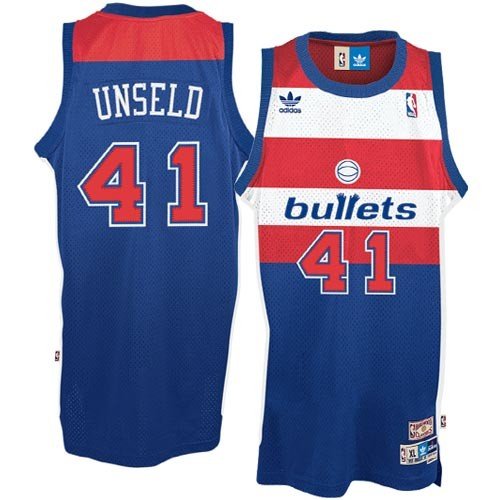
The legendary Bullets "barbershop" jerseys
A Brooklyn native who first came to DC to attend Georgetown, Leonsis made his coin in the internet boom of the Nineties, as he was heavily involved with AOL and still holds the position of “Vice Chairman- Emeritus” there. But he desired to own a sports franchise, and bought first controlling positions in the Capitals, and as of this year, the Wizards. By all accounts he stays very involved with operations of his team, and as one of the more competitive owners in both leagues, has actually prevented opposing fans from buying tickets in the Verizon Center for Capitals playoff games. Talk about a computer nerd run wild.

In last week’s NBA Draft, Leonsis and the Wizards continued attempting to upgrade the roster and bring in talent to complement the exciting young team he has. With the sixth pick, the Wizards brought “the Dunking Ninja”, Jan Vesely, to play alongside John Wall, and in the process the cocky Czech Republican stole the show by making out in front of thousands with his girlfriend and dubbing Blake Griffin “the American Jan Vesely”. Another pick yielded Chris Singleton, who had been projected to go significantly higher, and their final pick brought former Butler star Shelvin Mack to the Beltway. The draft has been criticized, as although the changes should result in a faster pace of play next year, the Wizards appear to have reached on some of the draft picks. But Leonsis has accomplished something that while perhaps the most visible change on the rink or court, has subtle symbolic and historical implications- that’s right, he changed the uniforms.

The Capitals reverted from their disgusting teal-ish, black, white and gold scheme in 2007 back to a form of their original logo and jerseys of their beginning years in 1974. Combined with the emergence of NHL superstar Alexander Ovechkin, this has raised greater fan support for the Capitals and generated some nice publicity. But aside from Michael Jordan’s foolish decision to un-retire for a second time when he could enjoy the simpler things in life, the Wizards have been an NBA wasteland since when they were the Baltimore, and then Washington, Bullets, when Wes Unseld rocked one outstanding mini-fro and led them to the 1978 NBA title. Sadly that was the last we saw of those beautiful barbershop-stripe unis on the court (except for the occasional throwback night, and of course, the NBA still sells them as part of their Hardwood Classics collection).

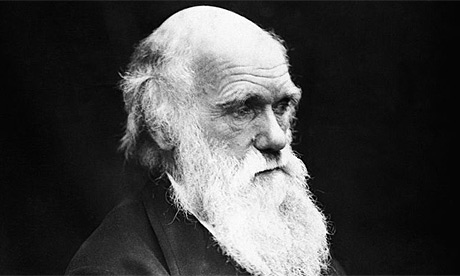
Until 2011. Leonsis has expressed his patriotism again by red, white and blue-ing the Wizards’ shoddy, outdated, bastardized-Capitals colors. Unfortunately he decided to keep the once-clever “Merlin” Wizards logo, who now looks more like Santa Claus or Charles Darwin than any associate of King Arthur. But the jerseys hearken back to the glory years and tradition of the franchise, appeal to the patriotism of the DC fan base, and market the heck out of second-year point guard, number one overall draft pick and Franchise Savior Wall (who’s probably more well known to you as the guy behind this ridiculous dance “move”). The uniforms look and represent the attributes basketball jerseys should: classic and cool.


Rebirth of the cool
For detailed analysis of the actual uniforms, you can check out Paul Lukas’ blog which goes in-depth with the changes. As far as the aesthetic qualities of the uniforms are concerned, the bold, bright colors of the new-look Wizards mark this jersey as opening a new chapter in the franchise’s history, free from a team lead by a fun-loving, overpaid, wanna-be gangster who brought guns into the locker room in a blatant violation of NBA policy (notice, NRA lobbyists/supporters, that I didn’t say anything about the constitutionality of the ban). Not only is it a time-honored tactic to spur merchandise sales, the Wizards’ changing of the garments signifies the commitment Leonsis has made to revamp the franchise in the same manner that he’s transformed the capitals. The sweet duds will be far from enough to vault the Wizards into the playoffs, but it’s an obvious, yet subtle, sign of the hope and change that’s coming to Beltway basketball (if not Beltway politics). I only wish I’d be around in the fall (assuming there’s an NBA season) to see the revolution be televised
-The Real Deal

Tuesday, June 21, 2011

Pryor Knowledge

Terrell, Tressel, and the problem with the NCAA’s legalism.

The NCAA has a problem.  It has for several years now.  The problem is that they have no concrete, practical, or working plan on dealing with cases of “illegal” benefits.  The problem mainly lies with men’s football and basketball, because let’s be honest, these are the only two nationally followed collegiate sports.  My whole point in writing this will be to make the case that the NCAA needs to get its head out of its @%$ and start letting the kids live a little.

The Jim Tressel case is the most talked about situation, but these cases are nothing new, with violations involving USC, Memphis, and Boise State also coming to light in recent years.  All these situations really made me sympathize for the players and teams with the “violations,” due to the absurdities of some of the NCAA’s rules.  The NCAA really has a lot of nerve, when they say to Ohio State and its players “We have found major violations with 5 of your star players, and they will be suspended for the first five games of next year.”  Let’s not mention that, if those players don’t play in the upcoming Sugar Bowl, it could cost Ohio State, the Big Ten, and the Sugar Bowl millions.  So we see some Washington style politics and who knows how much cash change hands in order to preserve their eligibility.  So much for the integrity of the rules.

So that is the first beef I have with NCAA rules.  The rules are set in stone, but punishment is not, depending on how much money is riding on you.  Then we have the pettiness of some of these rules, and their obvious ineffectiveness.  We must remember that these football players are college students.  Yes, they have their full ride scholarships, but they don’t really have time for a part time job.  They already have full time ones (class and football).  So what would we expect 18-22 year olds to do, when they receive bowl gifts, or have leftover jerseys, that they could sell and get a little spending cash from.  They sell them.  Or if a tattoo artist is a fan of the players, and wants to give them some free stuff?  They do it.  But then we have the NCAA step in, with their almighty wisdom, and it declares any such sale of their OWN personal property, or acceptance of gifts from someone other than the university, to be illegal and punishable by suspension. 
Two faces familiar to Buckeye fans won't return in the fall.

Of course in the case of Ohio State, there was some behavior I am not OK with.  I think that players should be able to sell their items, or accept certain gifts, but lying about it is not OK.  It is wrong that Jim Tressel lied about his Pryor knowledge of the situation.  However, I don’t think this great coach should lose his job over this cover up.  I’d be willing to bet he was NOT the first coach who ever knew about violations and covered it up, but he was silly enough to get caught.  Sorry Tress.
        
Another unfortunate part of these incoherent violations is that the consequences are harshly placed on people who are not to be blame.  Coach Tressel took the brunt of the consequences at Ohio State.  But he was not the one getting tattooed or making bank from autographs.  Players do these things, are found guilty of violations, then leave, usually before they can be punished.  Coaches, the university, and teammates face unfair punishment for what others have done.
The most absurd and disappointing punishment is when the NCAA has taken away wins from teams for violations from one player.  The very concept, that in 2006 there is no football national championship, is moronic.  Taking away a national championship from a school, just because one player was ineligible, is not fair to the 90+% of other players on the team who followed the rules and won that game.  The players won that game.  Let’s think of a punishment a little less demeaning and childish.

The University of Kentucky was recently told that they should apologize for a 500th win celebration in honor of Coach John Calipari, because according to the NCAA, 42 or so of those wins were “vacated,” due to violations at his previous schools.  Now, I’m not the biggest fan of Calipari, because I feel that he was in violation of some of the NCAA’s more sensible rules on recruiting.  But still, an apology for a party?  Come on, NCAA.  That is just ridiculous.  He may have used un-kosher methods to acquire his players, but they still won those games.  Saying that he was not victorious 500 times is denying reality and part of a pathetic power trip.

Those are just some thoughts on the NCAA and their current problems with violations, punishment, and enforcement.  I know there is a need for rules, but some of them could be done away with.  Let the players make a little money.  The college could pay them a small stipend each month.  It need not be every sport, because not every sport has problems with violations, nor does every sport generate close to the amount that football and basketball do.  These two sports bring in so much money, and they are prevented from jumping straight to the pros to get paid.  So either let them go get paid immediately, or show ‘em a little love.  And please try and find some better punishments for violations of the legitimate rules (on academic problems, dirty recruiting, etc.).  Don’t punish the innocent for the crimes of the guilty.   
-Paul of the Wild

A History of Violence

Why the battle for Lord Stanley’s Cup disgraced the game
Last Wednesday night an intriguing NHL regular season and fantastic playoffs (wait, aren’t the Stanley Cup playoffs always fantastic? Yes, pretty much the only sports event in the spring that’s guaranteed, every time. OK, I’m biased, I’m a big hockey fan...anyways) ended in the best possible scenario. After a tenacious six games between one of the storied Original Six’s American franchises and a Canadian city manically and violently desperate for a championship, the Bruins flew back to Vancouver and manhandled the Canucks in front of their stunned home fans.

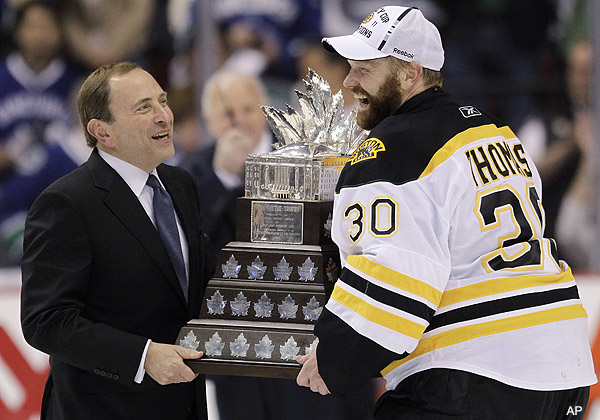
Grizzled veteran Tim Thomas, who played journeyman goalie in the minors and Finland for years until his breakthrough in 2008, peaked at the ideal time for the Bruins: after an amazing regular season where he may very well be awarded the Vezina Trophy again, Thomas had an even higher save percentage and goals-against average while playing every game of the playoffs, and his Finals performance is already legendary. The Conn Smythe winner at 37 years young played the most dominating goalie performance I can recall since my favorite hockey team of all time had Dominik Hasek rack up six shutouts in the 2002 playoffs. Hats off to Thomas, and to the effort of the Bruins defensively in denying the high-powered Canucks offense, led by those freaky Swedish twins and Ryan Kesler. It sounds like the best Stanley Cup series of the post-lockout NHL!
Another save for the indefatigable Thomas

Unfortunately for hockey fans in most cities besides Vancouver and Boston, this series proved to be a regression and disappointment from so much of the promise and expectation that lay in store for this NHL season. After the fantastic 2010 Olympic gold medal game brought hockey back to the forefront, the Chicago Blackhawks brought the Cup back to Chicago after a fifty-year drought, reinvigorating the most dormant of the Original Six markets. And in the fall, HBO’s fantastic “24/7” miniseries followed the buildup to the Winter Classic between two of the NHL’s most exciting teams and their two superstars of the moment, Ovechkin and Crosby. When I first viewed “24/7” I thought two things:

1. This will actually increase the mainstream popularity of the NHL among casual sports fans! (This didn’t really pan out, although the NHL did have to compete with the best NBA regular season since Michael Jordan.)
2. Despite my love of the Red Wings and the NHL in general, I don’t have the best cable TV package at college to watch the games (no Versus or Fox Sports Detroit) and I thought I would probably just follow from a distance and tune back in for the playoffs. But... the miniseries captivated me. And I don’t even particularly like either team (especially not this annoying *#@$).
So needless to say, I had high hopes for such a promising series between two good markets and the two best teams from the East and West. And it didn’t disappoint, it thrilled NHL fans with a quicksand-paced, idiotic-finger-biting NHL Hitz tribute, exactly what hockey needed. The sarcasm dripping from that last sentence is now pooling on the floor. Gross.

Although the series produced several closely contested finishes, those were all Vancouver wins, and the Boston wins were slaughters where “emo goalie” Roberto Luongo was shell-shocked in the net. We saw acts of despicable sportsmanship go unpunished by the referees, which left the players to “police themselves” with the most penalty minutes in a Stanley Cup Finals in 20 years, and more importantly since the lockout.

After finishing Ken Dryden’s fantastic book, The Game, this summer on my way out to DC, I have to say that while his accounts of life in the NHL are fantastic, the most interesting part of the book was his anthology of play style and violence in the NHL. When Dryden comments in 1983 that “the violence of our game is not so much the innate violence in us as the absence of intervention in our lives. We let a game follow its intuitive path, pretending to be powerless, then simply live with its results”, he touches on the issues that we thought the league had solved after the lockout. Theoretically, hockey should be more fast-paced, skillful and exciting than ever before on the ice, and the hard salary cap unique to hockey has ensured that many teams in the league can be competitive. And the attempts to produce higher scores by the league (and thus, fans) had, again in theory, driven down the ugly violence that chronically weakens hockey.

But while the playoffs have traditionally been the venue for the older, scrappier brand of hockey, I don’t mind that as long as the talent is still on display. This Stanley Cup Finals, the games were still tense and well fought as they always are in the playoffs, but the verbal and physical sparring, combined with the deeply disappointing riots in Vancouver (standing in for Baghdad or Detroit circa 1984) really hurt my enjoyment of the series. Don’t quote me wrong; I love scrappy hockey as much as the next guy: a good fight can be part of the game (man, I wish the Avs were still good so the rivalry would be back). But that does not mean the style of play between the whistles need suffer. And during this series, the fights and penalties and insults overshadowed the games, which just continues to play into the stereotypes the NHL has tried to change since the lockout.
Typical post-whistle shenanigans


There are times where I miss the pre-lockout NHL, but the style of play has definitely progressed and become more open today. With HDTV allowing fans to actually follow the puck without goofy graphics and the in-arena product better than ever, and the exposure the NHL has generated from the Winter Classics, it’s now more important than ever for the NHL and their referees to maintain order on the ice. While the NHL doesn’t have the same trust issues with their referees as other leagues, they need to realize that the playoffs are the time to showcase their product to the world on a larger stage, and if playoff games degenerate into penalty-fueled routs, it will remain the weird cousin of the major American sports leagues. Instead of a breathtaking series capped by a Game 7 that will be talked about for years to come, sports fans wound up with a mostly-forgettable brawl-filled ordeal, which pleased few people besides those pesky Bostonians. It may have been what they wanted, but outside New England, it’s clear that this wasn’t hockey’s finest hour.
-The Real Deal

Springtime for LeBron

The offseason gameplan for the Most Vilified Player in sports

The Real Deal (RD)- Welcome to the first feature post on our new website. This column is a feature we’ll run regularly called “Triple Trouble” where the editors of the site hold a running discussion on an important topic in sports.

Where would we start, but with the climax to one of the best NBA Finals and regular seasons in recent memory? Rhetorical question; guys, here’s the real question, “What Should I Do?

Make that, what should LeBron do from here to move on and improve himself?

Paul of the Wild (PW)- Skip Bayless suggested Pat Riley get him a sports psychologist.  I was not aware such a thing even existed.  Honestly, this could be a good idea.  Something was not right with him in the second half of the Finals.  The same thing seemed to happen to him in the Cavs’ last playoff game last year.  He seemed completely passive, lost, and disinterested.  It’s pretty hard for me to believe that he just didn’t care.  But could there be something to all of the recent talk of him being too arrogant to get down and dirty?  I recently heard on a radio program someone comparing him to a kid who wants to be a rock star, but doesn’t enjoy playing a guitar.  This seems to be a good analogy to LeBron James.  A lot of the time, he doesn’t look like he is having fun, or enjoying playing basketball.  I think he wants to be an all time great.  But he doesn’t seem to relish the challenge of getting there.  There was no mention in his post game comments until days after that mentioned working harder.  He did not shoulder much of the blame and barely did he mention his shortcomings.  It was all about him going back to his life, and everyone rooting for him to fail going back to their lives and problems.

RD- These are good points. Obviously winning is important to him, as he joined forces with two other NBA stars to win, but that’s the easy way to winning, at least in the post-Jordan mythology and ethos of the NBA. Jordan worked his butt off in Chicago to become better. LeBron seems almost too confident in his abilities and not realizing that he can continue to improve and become greater. Wade’s at his prime or has already peaked. Bosh has likely peaked as well, at least physically. But LeBron has to take this offseason to actually work at basketball. There’s been much made by Bill Simmons and others of his “good at everything”, all-around game, but what does he do that is special? What is his “go to move”? It goes beyond that; the problem with LeBron’s role is that it’s the same role Wade already has. LeBron really does need to complement Wade (point adamantly made by Mike Wilbon), instead of simply stepping out of the limelight; it’s not so much that he can’t do it physically, it’s that he is confused exactly what that role is on the team. If the Heat sort that out this off season and LeBron comes back to complement Wade inside or outside, look out. Also, it’s hard to believe that Pat Riley threw this team together towards the latter half of the summer, only after (at least, so we’re led to believe) LeBron made his Decision. With an entire off-season to build the team around the Big Three, LeBron should have improved teammates to tag along in his quest for The One Ring.

Professor P-Funk (PF)- LeBron’s ability to make players around him better seems to have been left in Cleveland. Sure, the stat sheet still shows that LeBron still generated a healthy supply of assists (7.0 a game) but, according to him, the stats don’t matter (side note, hats off to LeBron here on the beat down of the retard reporter!). I will supply “the better question” for Lebron: instead of being concerned about “choking in the third quarter,” is it possible for him to be motivated to work on his basketball if, assuming Mr. Wild is right on this one, that he cares more about “going back to his life”? When thinking about what LeBron’s motives for “taking his talents to South Beach” might be (beyond great chances of a championship) I thought about something very similar to your “rock star” analogy. Our first hint to what LeBron might be thinking was that he is going to “South Beach”; not to Miami, not to the Heat. Put that together with the story that LeBron has been constructing a house in South Beach for the past few years with a freaking casino in it, his motives begin to move in an extra-basketball direction. No, I do not think that this gives evidence that LeBron has been making a 4-year long diabolical plan to screw over Cleveland. What it does in fact show is where his priorities are. LeBron wants to be the rock star without playing the guitar; in a word, LeBron wants to have the lifestyle of a rock star, perhaps disproportionately. His house has a casino in it (he should invite Jordan over), and apparently a Starbucks too, but where is the basketball court? Simply put, could this be a mirror of LeBron’s priorities? Is being the preeminent party guy more important to LeBron than basketball (and, when push comes to shove, even a ring?). Again, his choice of words is telling; he decided to go to “South Beach” and not to “the Miami Heat.”

RD- Jordan would kick his @%$ at cards. He’s better off inviting Barkley. Shoot, sorry Sir Charles, I didn’t mean that. Also good for him that he hasn’t pulled an O.J. and gone crazy in Vegas.

PW- Let’s not forgot that Florida has no state income tax.  Another reason for LeBron’s talents residing in South Beach perhaps?  

PF- A good point but we don’t see people jumping over with excitement to land in Charlotte or Memphis, places with low or no state income taxes. On the other hand people have been going out of their way to land with the Lakers and the Celtics; both are teams in states with very high income taxes (Massachusetts more-so than California).

RD- I think this should be motivation enough. To justify this moronic bash in the middle of summer, you have to live up to the hype. By “normal” standards, maybe even by LeBron’s standards, this was not a failure of a season. But with The Decision and this debacle as a backdrop, absolutely he failed.

PW- For a guy so talented and dominant at times, he is a poor leader.  In Game 6, with Dwayne Wade hurt, LeBron disappeared.  He looked to others in his moment to take over.  The offensive beast who completely took over the Bulls the previous series was gone.  LeBron can lead a team to victory when he wants to.  His performance against the Pistons in ’09, where he scored 25 points in a row, is evidence of that.  But there was no sign of that man in the Finals.  So the most work that needs to be done this off season is for LeBron to get his head straight, plain and simple.  He has the talent.  The Heat have enough pieces beside him to win.  It’s his for the taking.  He just needs to figure out how to rise to the challenge as he did in ’09 against the Pistons.  

RD- I think this speaks to the point that with two alpha-dogs, this is a question that needs answering. What you saw in the playoffs was Wade asserting his role as the clutch scorer. It’s something that the two of them will have to work out between them; if Wade’s legs fall apart a la Penny Hardaway in a few years, the torch needs to be passed already to LeBron, otherwise there’s going to be this underlying tension over who takes the last shot. This isn’t to make an excuse for LeBron’s failure to show up, but it would explain why he seemed more timid. Still, Bosh amazingly didn’t pump fake on the shot that won Game Three. If Chris Bosh is taking the last shot for you, LeBron James sure better be.

PF- Perhaps the Gettysburg between the these two alpha-dogs was Wade’s 8-second long chewing out of LeBron in Game 4. Simmons goes as far as to suggest that this became the turning point in the psychology of LeBron. If Simmons is right in asserting that this became the point when LeBron became too passive (cried to mommy, played with an “*#&$-you Dwayne Wade!” mentality, whatever) the question about LeBron peaking or going to new levels has everything to do with his motivation. The question is not about if he is young enough to change (he is), or if he has the skill set to accomplish new heights (wait, that’s in question?), its about whether or not he cares enough to get better. LeBron is at a crossroads where he seriously could be perfectly fine with just sitting back and letting Wade dominate the team while he goes off and throws the party that everyone wants to be at.

RD- Brother against brother? OK, the Civil War isn’t the clearest analogy; but I see what you’re getting at. I just think this tension has been there for a while but obviously they shelved it during the regular season.

PW-  Question: If the Heat deliver the same performance next year, does this relationship morph into an even more tense, potential Civil War scenario?  Do the Big Three break up?

RD- I shudder to think of that scenario, I shudder with joy.  

PW- I also find it interesting that Dwayne Wade is the clear cut leader of this team, in cheap humor and in basketball, or at least he is supposed to be.  Was he during the season, or projected to be by the pre-season?  I’m not so sure.  But universally it seems to be Wade’s team now.  How much of that fact can be attributed to LeBron’s Finals performance?  If LeBron comes through in Games 5 and 6, and the Heat win, is Wade still the rock of the team?  Do you guys understand what I’m trying to get at?  

RD- Sure, yeah I don’t think it was clear by the pre-season, and during the season. I really do think the Heat weren’t that worried about the question. This is something they really only had to contend with during the playoffs, as during the season they mostly lost to good teams, including your Bulls A LOT. And by the way, I was a Dwyane Wade fan until the Dirk thing.

PW- Another intriguing question for this offseason: CAN LeBron improve?  Have we overestimated what he can do?  The biggest reason I even entertain the possibility of this 26 year old being close to the end of his potential while still in his “prime,” is because THIS HAPPENED LAST YEAR.  I just now have realized how eerily similar these Finals are to the elimination Eastern Conference Finals as far as LeBron James’ play.  Triple double in a crucial game, yet losing?  Check.  Disappearance, apathy, inability to close? check.  And let’s not forgot, getting raked over the coals by Skip Bayless for his team’s defeat.  Check.  
I am a little more critical of LeBron than most people, I must say, fair or not.  But so far, these two elimination playoff series and the way he has played, have put serious doubts in my mind as to if he has the leadership ability to win a championship.  (maybe leadership could be wrong word here; so far, he lacks the clutch, killer instinct, finisher mode, etc.)  

RD- Mr. Wild, I think he absolutely can improve. The improvements, however, may not equal a triple-double a game, or five jaw-dropping dunks a game, or whatever. Maybe his improvement is simply getting his psyche right and then again, finding out how he can best help his team win. That implies he must be a rock star within the context of his band. The Beatles really are a good comparison to this Miami Heat team: Wade as McCartney, James as Lennon, Chris Bosh as George Harrison (OK, a bit of a stretch, it’s doubtful Bosh will ever do anything in basketball as awesome as “While My Guitar Gently Weeps”) and the remaining starters/bench have a talent level and fame level similar to Ringo. LeBron isn’t trying to break up the band; thank goodness there’s no Yoko Ono here. But he’s in the stage of being unsure exactly how to complement the real leader of the band (McCartney/Wade) while showcasing his individual talent. That’s where the rock-star analogy works.

PW- Great analogies.  The only problem is that in the last 2 games of the Finals, it seemed like Lennon played with the band for the concert, but then on the last song, he decided he would rather watch the concert without playing his solo, singing, or really participating at all.

RD- Ouch. I guess on the plus side, LeBron doesn’t have a Yoko Ono in his life...THAT WE KNOW OF!

So what is the big goal for Miami to improve in the offeseason? Is it LeBron doing what we just hashed out? Is it Bosh emerging? Finding better role players? We won’t know what the salary cap situation is for a while but what do the Heat need to do to get better?

PW- Better role players would help, definitely.  Mike Bibby had one of the worst statistical playoff performances ever.  The Heat are playing 4 on 5 offensively when Joel Anthony plays.  A completely healthy Haslem and Miller would be nice, and who knows, could have been the edge in the Finals.  Chalmers is solid.  But with a changed cap likely looming, the Heat are going to need to improve on what they have now.  They were a couple of unbelievable meltdowns away from winning this year.  So I say the main improvement will be with getting LeBron focused, motivated, and in sync with Wade.  

PF- I do agree that they could use a better supporting cast but Haslem and Chalmers DID play well. But, putting aside the question of role players, this fact cannot be reiterated enough: the Miami Heat almost completely reassembled their team and yet won two games in the NBA Finals. Although I concede to Mr. Deal that their season was a failure under the standard they set for themselves (LeBron’s outrageous prediction, parading the “Big Three” on stage, and the huge pre-season party bash at LeBron’s) it was not however a failure under plain old basketball terms. Winning two games in the Finals with your three best players coming back next season can only warrant optimism. Are they the favorite? Perhaps not . The Bulls and Celtics were injured when the Heat faced them and the Bulls too had new players to get used to their surroundings; both teams will be ready to play better next season. But I for one did not believe that it would be likely for the Heat to make the Finals in the first place and the fact they DID is an accomplishment in of itself. LeBron himself said that they don’t have to win a title this season to be successful, and they didn’t, yet they still WERE indeed successful. In summery, their mere appearance to the Finals, their two wins there, and playing every game close, proves that, yes, they are indeed just fine for next season. How can they be better? By something Allen Iverson didn’t appreciate; by the players making each other better by practice.

-The Real Deal
-Professor P-Funk
-Paul of the Wild